

Slicer Compensation Reading: First Layer and XY Size
2026-11-05
Slicer Compensation Reading: First Layer and XY Size
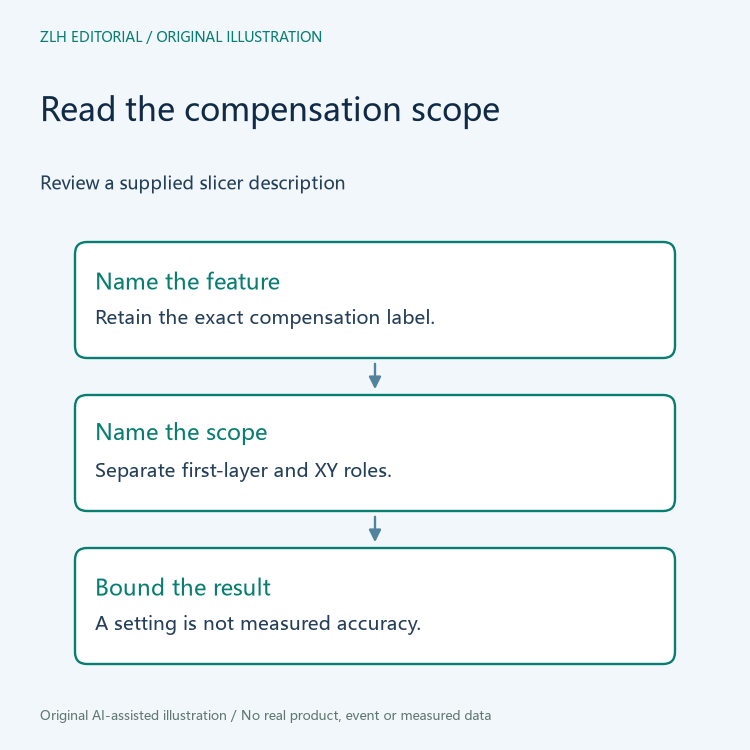
Slicer Compensation is an incomplete label when a print-preparation note does not say which feature it means. PrusaSlicer's elephant-foot compensation concerns the first layer, while XY size compensation has a different dimensional-adjustment role. A reader should preserve that scope before describing either setting as a correction of the entire printed part. This article reviews public documentation and an attributed official support reply, without slicing a model, changing settings or printing a test.
Retain the exact feature name in the supplied record
A short handover note might say that a model was compensated, but omit the feature name. The recipient cannot tell which geometry the statement concerns. Ask for the existing configuration description, software context and intended adjustment. An umbrella word should not replace the specific feature identity when the record is summarized for another person.
The sources were read on November 5, 2026. Their knowledge-base navigation places the material in a legacy PrusaSlicer topic context. That context should remain visible rather than presenting the pages as proof of every later software edition. The discussion here concerns the roles described in those sources, not the outcome of an unidentified current installation.
Read elephant-foot compensation as a first-layer feature
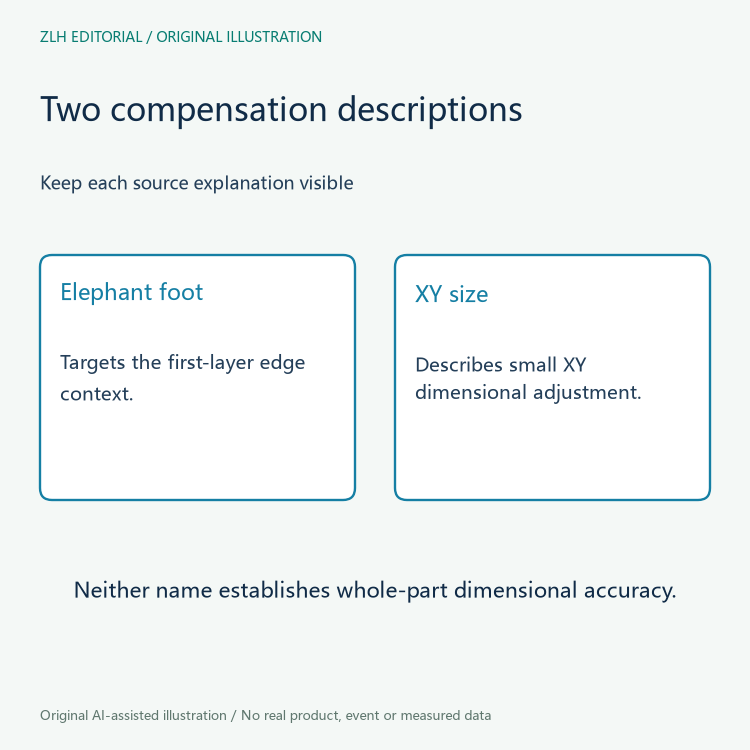
The official Elephant foot compensation article explains the feature in relation to first-layer widening against the print bed. It describes shrinking the first layer and identifies adaptive handling of thin lines. Its discussion of that detection explicitly names PrusaSlicer 2.2 and newer.
That scope is narrower than correcting every dimensional discrepancy throughout a model. A document reviewer should therefore retain the first-layer qualifier when summarizing the feature. The page also discusses preview appearances around thin features and brim connections. Those explanations remain manufacturer documentation, rather than observations that this review made of a printed object.
Read the XY size explanation with its source attribution
The official Per model settings page contains a response labeled Marina Curzi, Official Prusa CS, addressing a question about XY Size Compensation. The reply describes small dimensional adjustments, such as thread or hole sizes, and cautions against using the feature to fix the model size completely. It is an attributed support explanation in the comments, separate from the article's main instructions.
A source note should preserve that distinction. A reader's question is not a manufacturer specification, and an official reply should not be silently presented as the main article's complete feature reference. Here the reply supports a limited explanation of the XY adjustment role. It does not certify a particular printed part or establish a universally suitable compensation choice.
Separate feature scope from measured dimensional agreement
The first-layer qualifier and the XY adjustment description answer different questions about the intended effect of a feature. Neither one reports a comparison between a specific physical part and its required dimensions. A statement that a feature exists or was selected should remain separate from a statement that a finished item met a tolerance.
An actual dimensional claim would need its own defined object, measurement method, conditions and result. This article supplies none of those observations. It does not recommend a compensation amount, diagnose an axis or promise that a model will fit after an adjustment. Those additions would go beyond the reading task and the evidence available here.
Review a fictional preparation summary
Imagine a fictional file note saying “all dimensions corrected” while the only identified feature is elephant-foot compensation. The reviewer should ask which statement the author intends to support. If the note only concerns first-layer treatment, the summary should say so. If it claims whole-part dimensional agreement, it needs separate evidence. This invented example contains no actual model, setting value or printed result.
Another fictional note might use XY compensation as a synonym for the first-layer feature. The correction should restore the exact names and the source-specific scope. It should not involve editing the profile or running a print merely to make the note appear complete. If the original contributor has not explained which feature was used, keep that uncertainty in the handover.
Keep a useful conclusion at the document boundary
A clear review conclusion identifies the feature named in the supplied material, the geometric scope explained by its source and any missing evidence behind a dimensional claim. The original figures illustrate those documentary roles only. They contain no copied manufacturer preview, test coupon or simulated measurement, and do not show a successful compensation result.
Further reading appears in the three-dimensional printing document collection and article directory. Keeping the first-layer and XY descriptions distinct allows a recipient to understand what a preparation note actually says before interpreting it as a claim about a physical part.


