

Additive Model Briefings: Separate Nodes and Geometry
2026-11-04
Additive Model Briefings: Separate Nodes and Geometry
A model briefing can report a geometry count while its illustration appears to show several copies of the same shape. That is a reason to ask what was counted, rather than immediately call the file incomplete. Scene nodes and geometry definitions describe different aspects of a model's organization. The distinction is useful in additive-manufacturing reporting, where a digital scene should not silently become a claim about the number of physical parts produced.
Define the object the briefing intends to describe
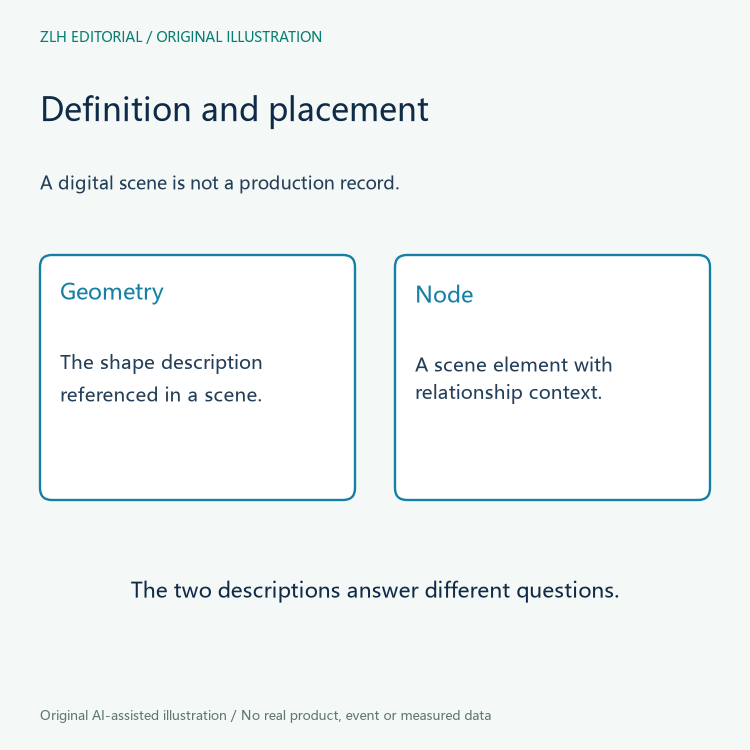
Imagine a fictional scene used to illustrate the arrangement of repeated covers. The model author may organize a geometric shape separately from the nodes that place it in a scene. This example supplies no real part geometry, quantities or printer settings. A reviewer should first ask whether a statement concerns stored geometry definitions, scene placements or manufactured items. Those objects do not acquire the same meaning merely because a preview makes them look alike.
Keep the model filename and the described scene attached to the count label. A file can contain information that is not all shown in one selected view. A screenshot is evidence of the view it depicts; it does not fully describe the file's structural organization. If the source says objects without defining the term, request a more precise account before placing the number in a manufacturing headline.
Read geometry names and node names separately
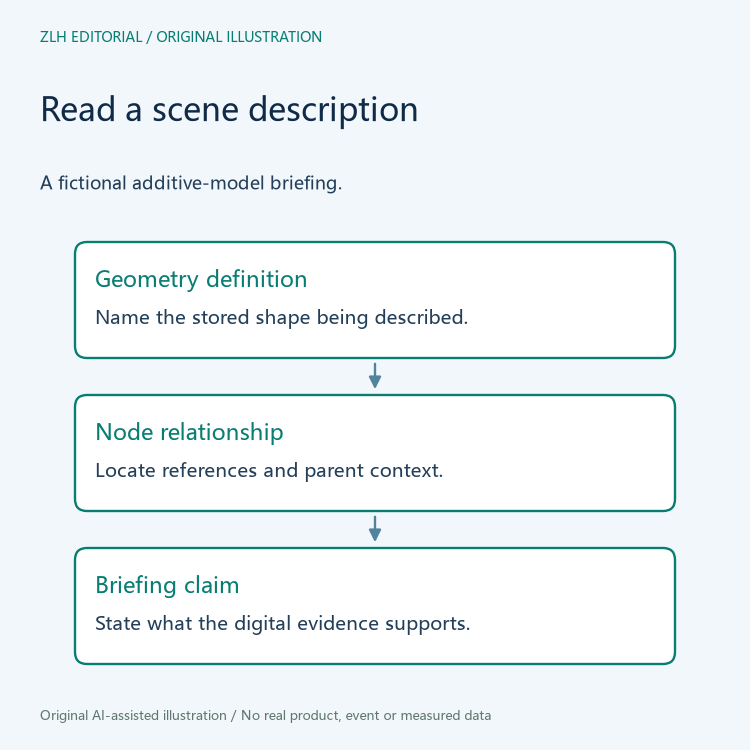
The trimesh Scene reference describes a scene graph and distinguishes node_name, geom_name, parent_node_name and a transform in add_geometry. These parameters identify different roles in that API. They give a reader vocabulary for asking about a scene, but do not establish the behavior of every file importer or export format.
For the fictional covers, a useful source note maps a named geometry to the node references described by the author. It should not rename the geometry as a finished part without support. If the supplied material includes only a list of geometry names, say that the placement structure was not examined. If it includes node descriptions, retain their relationship to the corresponding geometry instead of presenting the two lists as independent inventories.
Keep transforms within their hierarchy
The Khronos glTF scenes-and-nodes tutorial explains nodes, child relationships and local transforms. It describes how translation, rotation and scale can be represented and how hierarchy affects attached elements. This is a second primary source for scene organization. It does not imply that trimesh terminology and glTF fields are interchangeable in every detail.
In the hypothetical briefing, a transform can explain a placement in a digital scene. It is not a physical measurement of a printed cover. Ask which node and parent context the placement statement refers to. A local description detached from its hierarchy may not explain the final scene placement that an illustration suggests. No transform calculation is performed here; the review asks for a traceable account of the model representation.
Explain apparent duplication without asserting production
Suppose a fictional author says that the preview shows repeated placements while the geometry list contains a shared definition. The reader can describe that organizational relationship if the source supports it. There is no need to call the repeated placements separate manufactured parts. Nor should a shared definition be treated as proof that the placements are identical in all relevant respects. Their surrounding scene information still needs to be read.
If a later export stores repeated shapes differently, a structural count may change without a corresponding change in intended scene appearance. Ask the author what the export preserves and what the count now represents. Avoid presenting a lower geometry count as material savings or improved manufacturing efficiency. Those claims concern different evidence, including the actual process and physical output, which this documentation exercise does not provide.
Write captions that name the digital evidence
A suitable caption can identify a conceptual scene arrangement and state that it is not a photograph or measured production result. A source note can name the file, selected scene, relevant geometry references and node relationships examined. Retain the source terminology when a receiving application uses a different label, so the mapping remains available for a later review. If the briefing relied on the author's explanation instead of a structural inspection, attribute that explanation. Readers should be able to see which conclusion comes from which material.
The practical outcome is a clearer account of the digital model and the open questions about its use. Manufacturing acceptance, part quantity and physical suitability require separate evidence. Our technical information category and related resources category provide broader navigation for additive-documentation topics. These are category links, not reports that a particular model has been printed or that its represented parts have been accepted.


